
Gantry Cranes
Gantry cranes are customizable for a variety of applications and service requirements.
At G.W. Becker, Inc. our gantry cranes are designed and manufactured to either CMAA Specifications or AIST Technical Report #6. In addition, they meet current ANSI, NEC, and OSHA specifications.
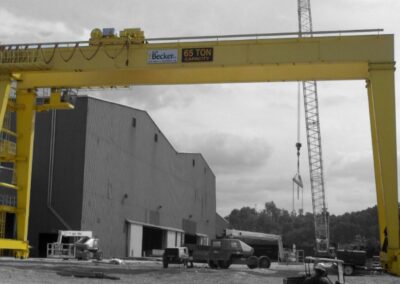
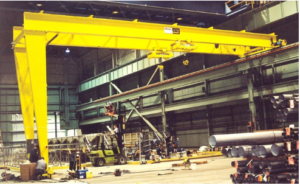
Gantry cranes are available in either semi-gantry (single leg) or standard gantry (double leg) configuration, and are available in single girder or double girder arrangement.
Ordinary girder type construction for light duty, short span bridges are standard rolled steel sections. Alternatively, welded plate box girders are available, but standard on heavier duty, higher capacity and longer spans.
Gantry cranes are customizable for a variety of applications and service requirements. They are typically utilized as workstation units below primary overhead cranes within an aisle; as independent units eliminating a costly runway structure, where a runway would be an obstruction to material flow within the plant, added to a facility without an existing runway or as a freestanding unit where a building does not exist.
Benefits of Gantry Cranes
No Runway Required
Gantry cranes operate independently of building structure, making them ideal for facilities without existing runways or areas where columns would obstruct workflow.
Flexible Installation
Use indoors or outdoors, below existing cranes, or in locations where overhead systems cannot be supported.
Cost-Effective for Localized Work
Great for assembly, maintenance, fabrication, and material transfer without modifying the building.
Built for Any Duty Level
Engineered to meet CMAA duty classifications based on application needs.
Common Applications
Workstations & Production Cells
Welding bays, machining centers, repair areas, and light assembly zones.
Facilities Without Structural Support
New buildings, expansions, or outdoor sites lacking adequate overhead steel.
Outdoor Handling
Shipyards, rail yards, steel yards, and construction or precast operations.
Supplemental Lifting
Adds capacity under primary overhead cranes for smaller, repetitive lifts.
Crane Design Options
Configurations
- Standard gantry (two-leg design)
- Semi-gantry (one floor-running leg, one elevated runway leg)
Girder Types
- Single girder
- Double girder
- Monobox or plate box girder options for high capacity or longer spans
Mobility / Environment
- Rail-mounted or fixed-location setups
- Outdoor-ready designs with storm locks, NEMA 4 enclosures, and corrosion-resistant finishes
Control, Safety, and Performance Options
Control Options
- Radio control
- Pendant control
- Variable frequency drives
- Automation-ready systems
- Positioning precision upgrades
Safety Options
- Warning lights
- Drop-zone lighting
- Collision avoidance
- Status indicators
- Outdoor wind locks and rail clamps (for exterior applications)
Service & Lifecycle Support
- Installation & commissioning
- Periodic & frequent inspections
- Preventive maintenance programs
- Replacement parts, rebuilds, and modernization services
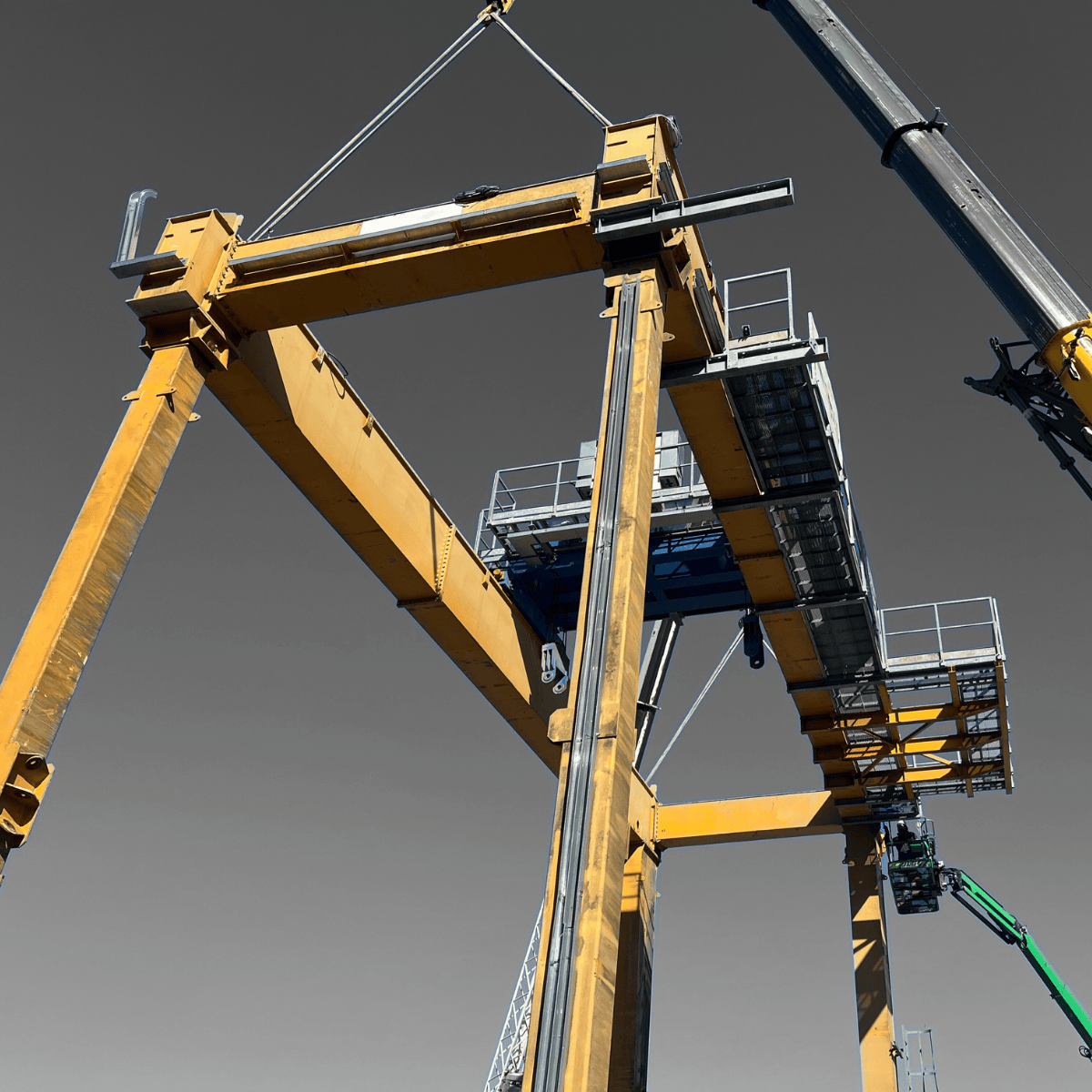
Completed Projects
Ready to Plan Your Gantry Crane Project?
If you need help determining whether a gantry crane is right for your application, our engineering team can walk you through load requirements, structural considerations, and layout options.
Fill out the form below and we’ll get back to you with the best solution for your facility.